A wild animal should not need to change its route, feeding pattern or resting place to accommodate a visitor. That is a useful principle, but applying it requires attention. Disturbance can be subtle, and a calm appearance does not prove that an encounter is benign. Choose guides who explain uncertainty rather than presenting their confidence as a guarantee.
Separate three questions: is the activity lawful, is it safe, and is it considerate of wildlife? A positive answer to one does not settle the others. Local regulations are the minimum framework. Weather, terrain, breeding activity and cumulative visitor pressure may call for more restraint than the formal rule requires.
Agree on limits before departure
Ask for the operator's viewing policy before paying. It should explain approach distances where applicable, group management, maximum time at a sighting and circumstances that trigger withdrawal. Avoid a company that treats those questions as an obstacle to providing a memorable experience.
There is no single distance suitable for every species and setting. Use current, species-specific guidance from the responsible authority, then give additional room when behaviour or conditions warrant it. For gorilla tourism in Rwanda's Volcanoes National Park or Uganda's Bwindi Impenetrable National Park, follow the authority's current health and viewing protocols. Do not replace them with a general safari rule.
Read behaviour without testing tolerance
Repeated vigilance, interrupted feeding, movement away from visitors or an adult placing itself between people and young can signal that the encounter needs to end. These examples are not a complete diagnostic checklist. Do not wait for dramatic distress, and do not move closer simply to discover where an animal's threshold lies.
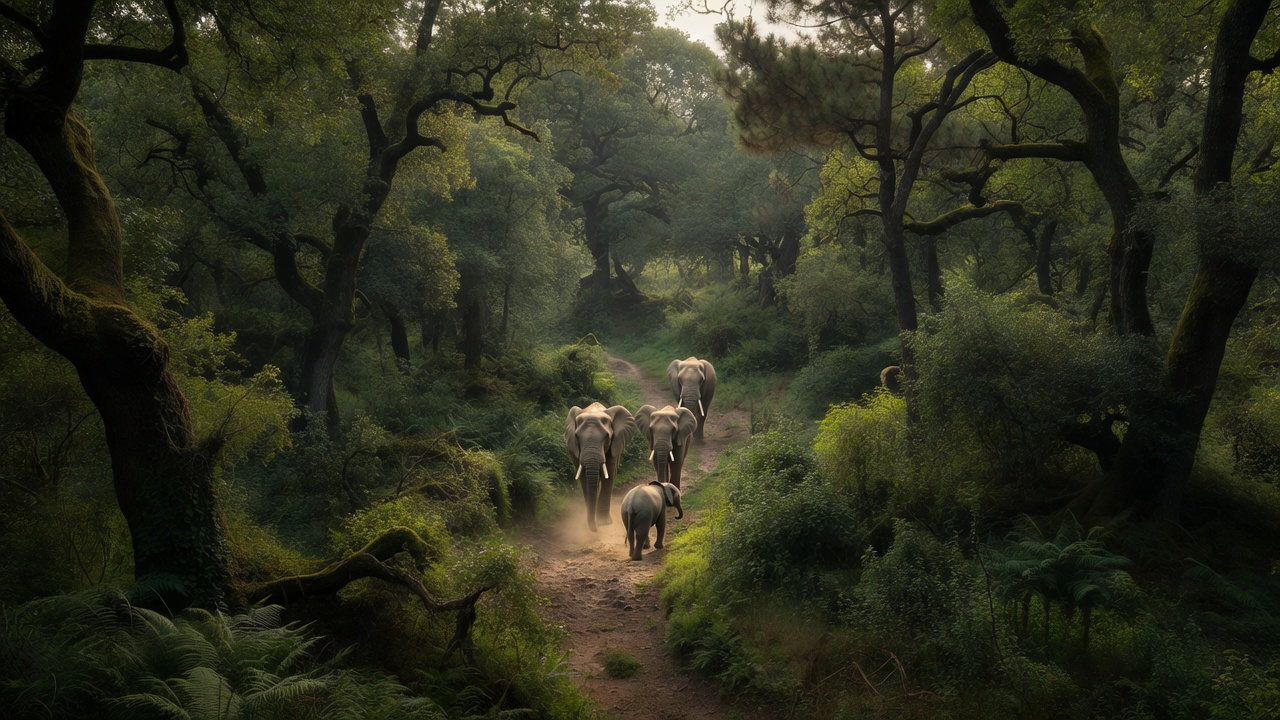
If wildlife approaches, avoid touching or feeding it. Follow the guide's safety instructions and leave an unobstructed route. A close approach initiated by an animal does not create permission to encourage contact or surround it. Avoid positioning yourself between an animal and water, shelter, its group or an escape route.
Question the mechanics of a photograph
A photograph can conceal the method that made it possible. Ask whether food, recorded calls, captive animals or repeated approaches are involved. Baiting and playback can alter behaviour and draw wildlife into risky situations. The fact that a method produces reliable images is not an argument for using it.
Keep drones away from wildlife and comply with aviation and protected-area restrictions. For night observation, ask about lighting intensity, duration and species-specific safeguards. Do not assume a coloured light is harmless. Avoid flash directed at wildlife, particularly where guidance prohibits it, and accept that some scenes are better observed without a photograph.
On water, restraint still matters
Whale and dolphin watching requires more than a quiet engine. Approach direction, speed, vessel numbers and the animals' ability to leave all matter. In places such as Kaikōura in New Zealand, consult the Department of Conservation's current guidance and use appropriately authorised operators. Requirements differ between species and activities.
Avoid tours that advertise chasing, surrounding or entering the water with wildlife without a clear legal and welfare framework. A vessel should not repeatedly reposition itself in an animal's path. If several boats are already present, a responsible skipper may decide not to join them.
Be careful with rescue and sanctuary language
Words such as “rescued”, “orphaned” and “sanctuary” describe claims, not a universal regulatory status. Ask why animals are held, whether breeding occurs, whether public handling is offered and how independent oversight works. Tourism involving routine touching, posing or performances deserves particular scrutiny.
Genuine veterinary care or conservation research may sometimes require handling, but that does not make handling a suitable visitor attraction. A welfare-focused facility should be able to explain why public interaction is limited or absent. Do not confuse an animal's apparent compliance with meaningful choice.
Use your leverage without creating another disturbance
State your expectations politely before the activity. If a guide begins chasing or crowding wildlife, ask to withdraw when it is safe. Record factual details afterwards rather than escalating beside the animal. Report serious concerns to the relevant authority and distinguish what you observed from what you infer.
The measure of a good outing is not its closest moment. It is whether the observation remained compatible with the animal carrying on. A distant, brief or unsuccessful sighting can be the correct outcome of responsible guiding.
Further guidance
- New Zealand Department of Conservation — marine mammal and visitor guidance.
- Rwanda tourism information — starting point for current park arrangements.
- Uganda Wildlife Authority — official park and primate-viewing information.
- World Animal Protection — animal welfare context for tourism.